Modern radiology is no longer characterized by discrete imaging devices- it is propelled by digital ecosystems that interconnect imaging modalities, data storage and clinical decision-making into a single workflow. Among these, the connection between MRI systems and PACS is central in the realization of efficiency, scalability, and diagnosis accuracy.
The MRI is among the most modern types of imaging modalities that can be used today, as it has the capacity to create a very detailed image of soft tissues, neurological structures, and internal organs. This level of detail is however accompanied by a trade-off which is the large volumes of imaging data that need to be stored, handled and accessed efficiently. Even the best MRI technology is rendered ineffective without a powerful system in place to process this data.
It is in this process that PACS is invaluable. As a keystone in the imaging data management, PACS converts raw MRI output into accessible, shareable, and clinically actionable information. This paper examines the technical, clinical, and operational collaboration of MRI and PACS, offering a system-level view of the application of this integration to improve radiological processes in the modern era.
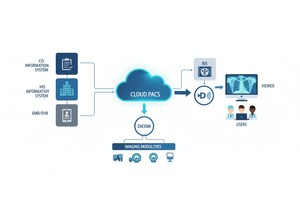
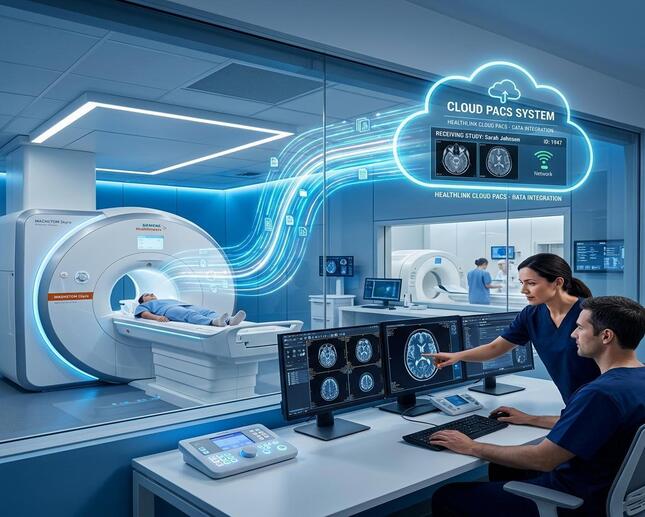
The Magnetic Resonance Imaging (MRI) systems create high-quality diagnostic images converted into DICOM format and sent to a Picture Archiving and Communication System (PACS). PACS stores, structures and disseminates such images and ensures that radiologists and clinicians can access them anywhere and in real time. This integration does away with manual processing, speeds up the diagnosis process, and massively enhances the efficiency of workflow in healthcare settings.
Magnetic Resonance Imaging (MRI) is a very high-level diagnostic imaging modality because it employs a high level of magnetic fields and radiofrequency pulses to create detailed cross-sectional images of the human body. It is especially useful in diagnosing brain, spine, joint and internal organ related conditions.
The data generated by MRI is very large and complicated, unlike the other imaging methods. Every MRI scan is comprised of a series of sequences that in most cases result in hundreds or even thousands of image slices. Such pictures cannot be diagnosed in isolation of each other and, thus, there is a high need to have effective data management systems.
MRI has major features such as:
• High-resolution, Multi-sequence Imaging
• Numerous Datasets Per Study.
• Need To Be Accurate When Compared To Historical Scans.
• Extensive Applications In Neurology, Oncology, Orthopedics And Cardiology.
Due to these features, MRI processes are highly reliant on systems capable of processing large volumes of imaging data without delays or failures.
Picture Archiving and Communication Systems (PACS) are centralized systems that are used to store, handle, and manage medical imaging information in a healthcare setting. Instead of using physical storage or piecemeal digital systems, PACS offers a single infrastructure of storing, retrieving, and sharing of imaging studies.
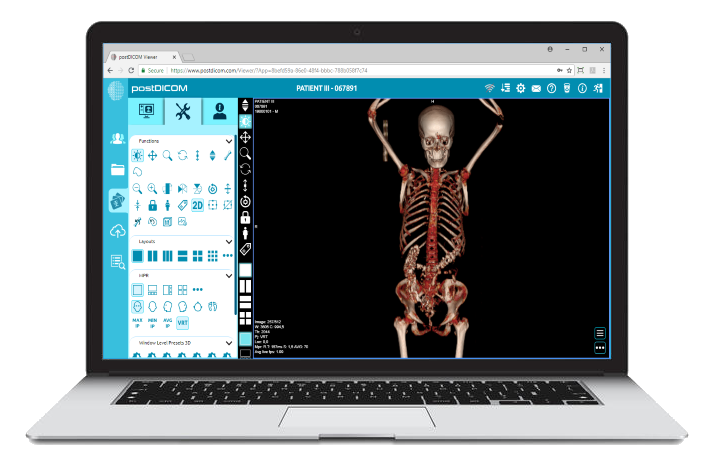
PACS is not just a storage system in modern healthcare, rather it is a vital hub uniting imaging devices, radiologists and clinicians. Services such as PostDICOM augment this with the addition of accessing the platform through the cloud and extendable storage along with the ability to integrate across various locations.
PACS core capabilities are:
• Storage Of Medical Images In Dicom Format
• Quick Access And Presentation Of Imaging Studies.
• Ensure Safe Sharing Of Information Among Departments And Facilities.
• Interoperability With Ris, His And Ehr Systems.
With the ever-increasing imaging volumes, PACS has become a scalable and intelligent system that can be helpful in supporting clinical workflows as well as operational efficiency.
 - Presented by PostDICOM.jpg)
In order to comprehend the entire effect of MRI integration with PACS, there is a need to look at the flow of imaging data in the acquisition and diagnosis. This is an end-to-end workflow that emphasizes the contribution of each element to efficiency and accuracy.
It starts with the MRI scanner that obtains raw imaging data. This information is reassembled into diagnostic-quality images considering standard protocols of imaging. At this point, it is all about developing high-resolution images that are capable of underpinning sound clinical interpretation.
After the creation of the images, these are translated to the DICOM format. This format enables each image to have not just visual information, but also necessary metadata like patient information, scan parameters, and study identifiers. DICOM standardization plays a vital role in interoperability between systems.
The images are converted and sent to PACS via secure networks. This is done in a local network in traditional setups and in modern cloud setups there is use of encrypted internet connections to facilitate fast and secure transfer of data.
PACS processes the images and stores them in data structures sorted by patient records, type of studies and time. High-level indexing means that images may be instantly available when required, even with massive healthcare systems with thousands of studies per day.
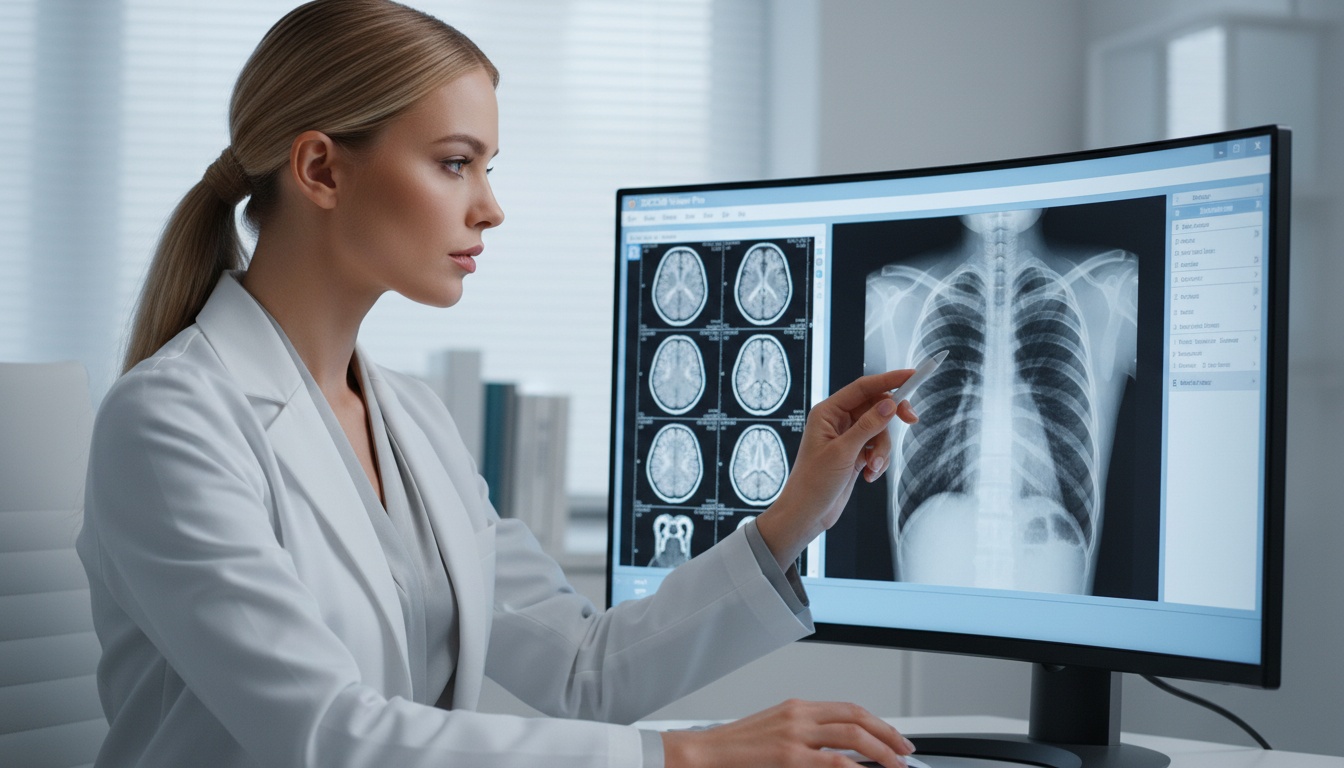
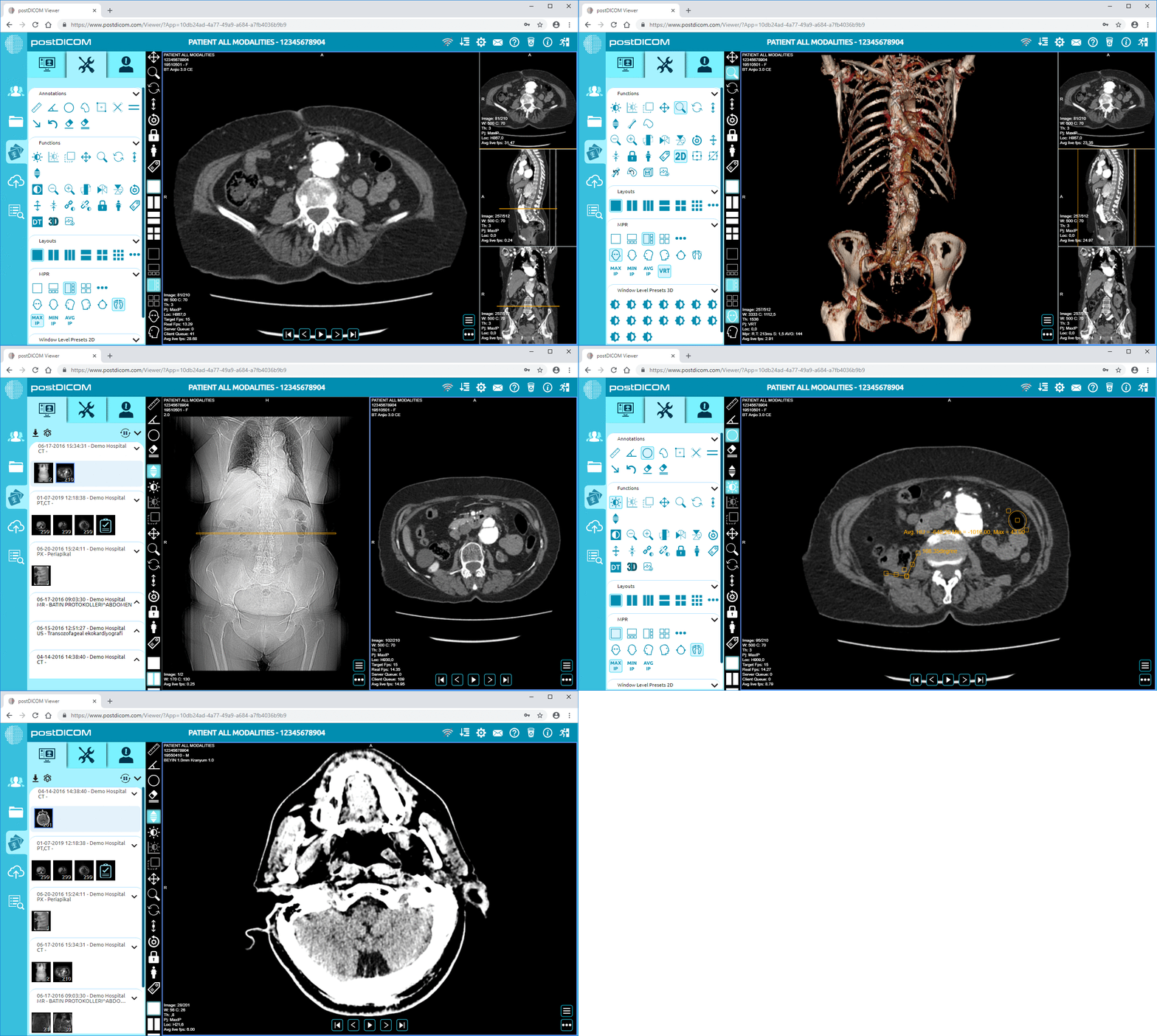
MRI images are available to radiologists via DICOM viewers, which are part of PACS. Such viewers offer advanced features like multi planar reconstruction, zoom, contrast and side by side comparison with previous research. It is at this point that clinical interpretation occurs.
Ultimately, the images and reports, which are interpreted, are exchanged with physicians and experts. In most instances, it can be extended to distant radiologists, and this facilitates teleradiology processes that can support 24/7 diagnostic services.
Take a small hospital with a high number of neurological MRI scans. In the absence of a built-in PACS system images would have to be manually moved, kept locally, and accessed via restricted workstations. This brings about delays, a high probability of errors, and limitation of collaboration.
Using a cloud-based PACS, such as PostDICOM, it is possible to make the workflow much more efficient. The MRI images are automatically uploaded to the cloud where they are instantly accessible to the radiologists on site and remotely. Doctors can access the findings of other departments and those in other areas can give second opinions without any delays.
This change does not only make the workflow more efficient, but also makes patient care more effective through a shorter turnaround time in diagnoses and quicker clinical decisions.
| Feature | Without PACS | With PACS |
| Image Storage | Local, fragmented | Centralized, scalable |
| Accessibility | Limited (on-site only) | Anywhere, anytime access |
| Workflow Speed | Slow, manual | Automated, real-time |
| Collaboration | Difficult | Seamless |
| Data Security | Risk-prone | Secure and compliant |
| Scalability | Limited | Highly scalable |
The comparison shows that MRI systems can reach their maximum clinical and operational potential only in combination with PACS.
The combination of MRI and PACS provides enormous advantages in the clinical workflows. These improvements are not only operational but also directly impact patient outcomes.
The access to MRI images in real time enables radiologists to start interpreting the images immediately. This is especially important when it comes to emergency situations where the diagnosis that can be made fast can have an enormous impact on the treatment choice.
Radiologists can use more advanced visualization tools and historical imaging data to make more accurate and comprehensive analysis. Since the scans are compared between the present and the previous scans, it assists in detecting those minute changes that would otherwise have been overlooked.
PACS facilitates the easy exchange of MRI studies amongst departments and geographic regions. This promotes multidisciplinary care, in which various experts are involved in the diagnosis and treatment planning.
Automation minimizes the chances of human mistakes, including wrong data entry or lost pictures. Standardized workflows provide uniformity and dependability of imaging processes.
Technically, MRI-PACS integration deals with several interrelated elements that collaborate to result in an efficient flow of data.
• Mri Scanner
• Dicom Interface
• Network Infrastructure
• Pacs Server (cloud Or On-premise)
• Dicom Viewer
The workflow may be summarized as a flow of imaging data starting with the capture and ending with its interpretation. MRI images are translated into DICOM format, sent over secure networks, stored in PACS and viewed using viewer applications to be used in clinical practice.
The integration is highly reliant on a number of factors:
• Bandwidth Needs: MRI produces huge files thus high-speed networks are necessary in the transfer of data.
• Latency: Delays in transmission can impact diagnosis time, particularly in urgent cases.
• Storage Scalability: With increasing imaging volumes, systems should be able to scale without affecting performance.
• Data Security: Data security is guaranteed by rules and regulations like HIPAA and PIPEDA.
PACS solutions may be traditional and cloud-based and healthcare organizations need to decide the type that suits their operations.
| Feature | Traditional PACS | Cloud PACS |
| Deployment | On-site servers | Remote cloud infrastructure |
| Cost | High upfront investment | Subscription-based model |
| Scalability | Limited | Virtually unlimited |
| Remote Access | Restricted | Fully accessible |
| Maintenance | Managed internally | Managed by provider |
The flexibility and scalability of cloud-based systems are evident, and their use in MRI workflows is gaining popularity.
 - Presented by PostDICOM.jpg)
Teleradiology has assumed a vital place in the contemporary healthcare system especially in areas where specialists are scarce. The integration of MRI and PACS helps radiologists to read imaging research remotely so as to provide constant diagnostic assistance.
This ability enables healthcare providers to:
• Maintain 24/7 Reporting Availability
• Tap Into Specialized Skills Around The World.
• Minimize Patient Care Turnaround Time.
• Serve Rural And Underserved Communities.
The field of artificial intelligence is quickly changing the landscape of imaging data analysis and and utilization. By combining with PACS, AI tools will be able to optimize MRI workflows, automating routines and aiding in diagnostic decisions.
The typical AI uses are:
• Automation Of Abnormalities Detection.
• Image Analysis And Segmentation.
• Prioritization Of Workflow According To Urgency.
• Clinical Decision Support Systems.
Since MRI data are rather complex, AI-based tools can be especially efficient and accurate.
Medical institutions need to think about potential optimization of their MRI-PACS integration when they start to experience inefficiencies in their operations or scalability constraints.
Common indicators include:
• Increasing Imaging Volume
• Delays In Reporting
• Storage Constraints
• Need For Remote Access
• Multi-location Collaboration Requirements
Modernization of PACS solutions can help in solving these challenges and enhance the overall performance of workflows.
Though it has its advantages, integration may also have a number of challenges that should be overcome to achieve the best performance.
MRI studies provide large volumes of data that may overwhelm storage and transmission systems. This problem could be controlled by the introduction of such strategies as cloud storage and data compression.
Lack of network capacity has the potential of slowing down image transfer and disrupting the workflow. These problems can be alleviated by upgrading infrastructure and optimizing data routing.
Outdated systems might not be compatible with the new PACS solutions, and integration could be problematic. Long-term scalability requires transitioning to interoperable platforms.
Maintenance of confidentiality of patient information is a priority. Encryption, secure access controls, and regulatory compliance systems play a pivotal role in upholding data integrity.
The future of MRI–PACS integration is shaped by advancements in cloud computing, artificial intelligence, and interoperability standards. Healthcare systems are transitioning to fully integrated, cloud-native environments which can aid real-time collaboration and predictive diagnostics.
Emerging trends include:
• Vendor-neutral Archives (vna)Vendor-neutral archives (VNA)
• Ai-powered Diagnostic Workflows
• Sharing Of Real Time Data Between Systems.
• Improved Interoperability With Standard Protocols.
These innovations will keep on enhancing efficiency, cost reduction and patient outcomes.
PACS stores, organizes and distributes MRI images, and thus allows rapid access and effective management of workflow.
MRI generates huge and intricate data, which needs to be organized and easily accessed, and PACS offers it.
The answer to this is yes; cloud PACS systems can enable access to MRI images at any place in a secure manner.
Scalability, accessibility and cost efficiency of cloud PACS are generally more favorable than traditional systems in most instances.
PACS aids more accurate diagnoses by offering sophisticated visualization and access to past imaging information.
DICOM is the standard which is utilized to store and convey MRI images and related patient and study data.
|
Cloud PACS and Online DICOM ViewerUpload DICOM images and clinical documents to PostDICOM servers. Store, view, collaborate, and share your medical imaging files. |